What Is Diabetes? Type 1 vs. Type 2 Explained
Diabetes is one of the most common long-term health conditions in the world, yet many people are unsure what it actually is or how the different types differ. This guide explains, in plain language, what happens in the body when someone has diabetes, how type 1 and type 2 diabetes compare, what other forms exist, and why getting an accurate diagnosis matters. It is written for the general public and is not a substitute for advice from your own health care team.
How your body normally handles sugar
Most of the food you eat, especially carbohydrates such as bread, rice, fruit, and starchy vegetables, is broken down into a sugar called glucose. Glucose enters your bloodstream and becomes the main fuel for your cells. When blood glucose rises after a meal, the pancreas, a gland that sits behind your stomach, releases a hormone called insulin.
The CDC describes insulin as acting "like a key" that lets blood sugar move out of the bloodstream and into the body's cells, where it can be used for energy. Muscles, fat tissue, and the liver all respond to insulin. Between meals, the liver releases stored glucose to keep levels steady. In a healthy body this system is finely balanced, so blood glucose stays within a fairly narrow range throughout the day.
What goes wrong in diabetes
With diabetes, the body either does not make enough insulin, cannot use the insulin it makes as well as it should, or both. When there is not enough insulin, or when cells stop responding to it normally, too much glucose stays in the blood. According to the CDC's Diabetes Basics page, high blood sugar over time can lead to serious problems such as heart disease, vision loss, and kidney disease.
The National Institute of Diabetes and Digestive and Kidney Diseases (NIDDK) explains that diabetes is a disease that occurs when blood glucose is too high, and that it can also damage nerves, the eyes, the kidneys, and other parts of the body. The good news is that diabetes can be managed, and taking steps early can lower the chance of complications.
The main types of diabetes
Health agencies describe three main types: type 1, type 2, and gestational diabetes. There are also less common forms. Each type has different causes, and treatment differs too.
Type 1 diabetes
Type 1 diabetes is thought to be caused by an autoimmune reaction, in which the immune system mistakenly attacks the insulin-producing beta cells in the pancreas. Over time the pancreas makes little or no insulin. Because insulin is essential for life, people with type 1 diabetes need to take insulin every day, either by injection or through an insulin pump.
Type 1 diabetes is often diagnosed in children, teens, and young adults, but it can appear at any age. The CDC notes that in its early stages type 1 may cause no symptoms, but as it progresses symptoms can appear suddenly, over a few weeks or months, and can be severe. There is currently no known way to prevent type 1 diabetes, although research into delaying its onset is ongoing, and the CDC notes that if found early it can be treated to avoid or delay symptoms and serious complications. The American Diabetes Association's type 1 overview is a good place to learn more.
Type 2 diabetes
Type 2 diabetes is by far the most common form. The CDC reports that type 2 accounts for about 90% to 95% of all diagnosed cases, while type 1 accounts for about 5% to 10%. In type 2 diabetes the body does not use insulin well, a problem called insulin resistance. At first the pancreas makes extra insulin to compensate, but over time it may not keep up, and blood glucose rises.
Type 2 diabetes usually develops slowly over many years and is most often diagnosed in adults, although it is increasingly seen in children, teens, and young adults. Many people have no noticeable symptoms, which is why screening is important for anyone with risk factors. Risk factors include having overweight, being 45 or older, having a parent or sibling with type 2 diabetes, being physically active fewer than three times a week, and having had gestational diabetes. Treatment often starts with healthy eating, physical activity, and weight management, and many people also take medicine, which may include pills, non-insulin injectable medicines, or insulin. The ADA's type 2 overview covers this in more detail.
Gestational diabetes
Gestational diabetes develops during pregnancy in people who did not have diabetes before. It usually goes away after the baby is born, but it raises the parent's risk of developing type 2 diabetes later in life, and the child is more likely to have obesity and type 2 diabetes later on. The CDC notes that gestational diabetes usually has no symptoms, so testing is typically done between 24 and 28 weeks of pregnancy.
Other forms
NIDDK describes less common types as well, such as monogenic diabetes (caused by a change in a single gene) and cystic fibrosis-related diabetes. Diabetes can also result from damage to the pancreas or from certain medicines. Because treatment depends on type, an accurate diagnosis matters.
Type 1 vs. type 2 at a glance
| Type 1 | Type 2 | |
|---|---|---|
| Main problem | Body makes little or no insulin (autoimmune) | Body doesn't use insulin well (insulin resistance), insulin production may decline over time |
| Share of diagnosed cases (U.S., CDC) | About 5%–10% | About 90%–95% |
| Typical onset | Often childhood or young adulthood, but any age | Usually adults, increasingly younger people |
| How it develops | Symptoms may appear quickly once they start | Develops slowly; may have no symptoms for years |
| Prevention | No known way to prevent it currently | Can often be prevented or delayed with lifestyle changes |
| Treatment | Insulin every day, plus monitoring, food planning, activity | Lifestyle changes; often medicines, sometimes insulin |
Prediabetes: the stage before type 2
Prediabetes means blood glucose is higher than normal but not high enough to be diagnosed as type 2 diabetes. The CDC states that more than 2 in 5 U.S. adults have prediabetes and that about 8 in 10 of them do not know it. Prediabetes is important because it is a window of opportunity: lifestyle changes can lower the risk of progressing to type 2 diabetes. See our guide to prediabetes for details.
How diabetes is diagnosed
Diabetes is diagnosed with blood tests. Common tests include the A1C test, which reflects average blood glucose over roughly the past three months; the fasting plasma glucose test; and the oral glucose tolerance test. A random blood glucose test may be used when someone has clear symptoms. Our article on A1C and blood sugar targets explains the numbers. Only a health care professional can diagnose diabetes, and results are usually confirmed with repeat testing.
Why diabetes matters
The CDC reports that more than 40 million Americans have diabetes and that more than 1 in 4 adults with diabetes do not know they have it. It also lists diabetes as a leading cause of kidney failure, lower-limb amputations, and adult blindness. These complications are not inevitable. Keeping blood glucose, blood pressure, and cholesterol in target ranges, not smoking, and getting regular eye, foot, and kidney checks can greatly reduce risk.
Living well with diabetes
Whatever the type, managing diabetes usually involves a combination of steps:
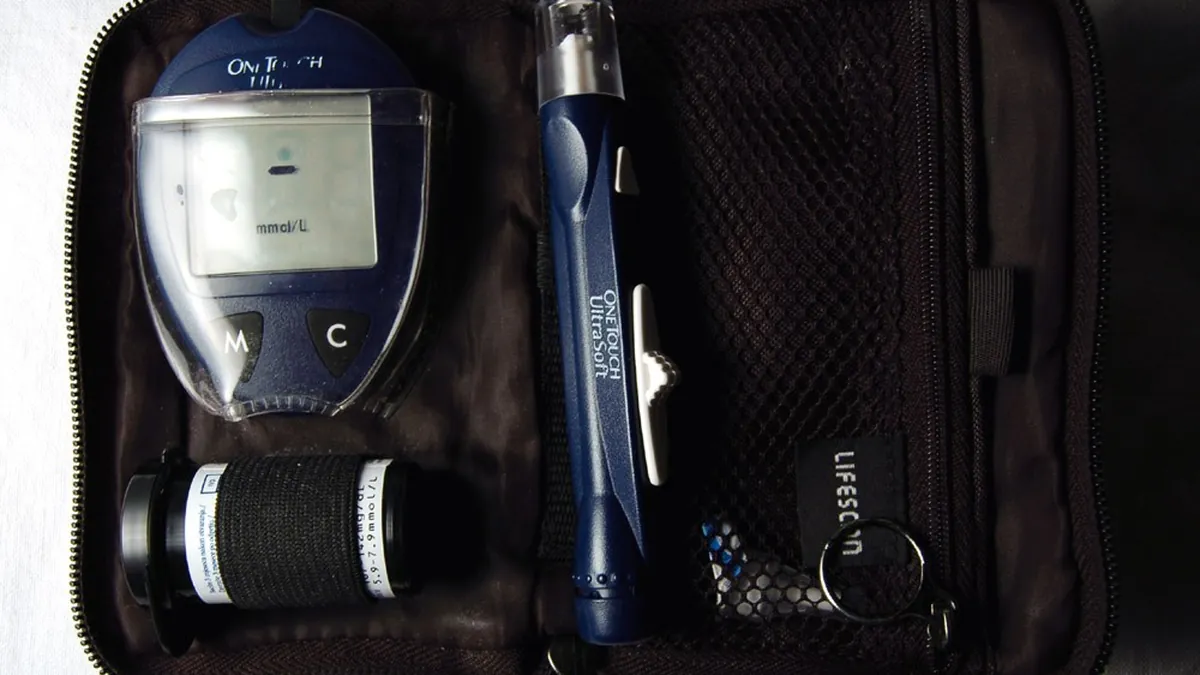
- Monitoring blood glucose with a meter or continuous glucose monitor (CGM), as recommended by your care team.
- Eating patterns that support steady blood sugar. See diabetes-friendly eating basics.
- Regular physical activity, which helps the body use insulin more effectively. See exercise and diabetes.
- Taking medicines as prescribed, including insulin when needed.
- Diabetes self-management education and support (DSMES), which the CDC recommends asking your doctor about.
- Regular check-ups, including A1C tests, eye exams, foot checks, and kidney tests.
When to talk to a doctor
If you notice symptoms such as increased thirst, frequent urination, unexplained weight loss, or blurry vision, or if you have risk factors for type 2 diabetes, ask a health care professional about testing. Our early signs and symptoms article explains what to watch for. Seek emergency care for symptoms such as nausea, vomiting, abdominal pain, fruity-smelling breath, confusion, or trouble breathing in someone who may have diabetes, as these can signal diabetic ketoacidosis (DKA), a life-threatening condition.
Key takeaways
- Diabetes means blood glucose is too high, because the body makes too little insulin or cannot use it well.
- Type 1 is autoimmune and requires daily insulin; type 2 is far more common and linked to insulin resistance.
- Type 2 diabetes and prediabetes often have no symptoms, so testing is important if you have risk factors.
- With good management, people with diabetes can lower their risk of complications and live full lives.
Sources
Links to the sources cited above appear in the text. We rely on the Centers for Disease Control and Prevention (CDC), the National Institute of Diabetes and Digestive and Kidney Diseases (NIDDK), and the American Diabetes Association (ADA).
Related guides: Diabetes basics
- Type 1 Diabetes: Causes, Diagnosis, and Treatment
- Type 2 Diabetes: A Complete Overview
- Gestational Diabetes: What to Know During and After Pregnancy
- Prediabetes: What It Is and How to Reverse Course
- Early Signs and Symptoms of Diabetes
- Diabetes Symptoms in Women: Signs to Know
- Diabetes in Children and Teens: A Guide for Families
- Diabetes Myths vs. Facts
- LADA (Type 1.5 Diabetes): Autoimmune Diabetes in Adults
- MODY and Rare Types of Diabetes
- Insulin Resistance: Causes, Signs, and How to Improve It